Walking for Spine Health: How Much, How Often and How Fast?
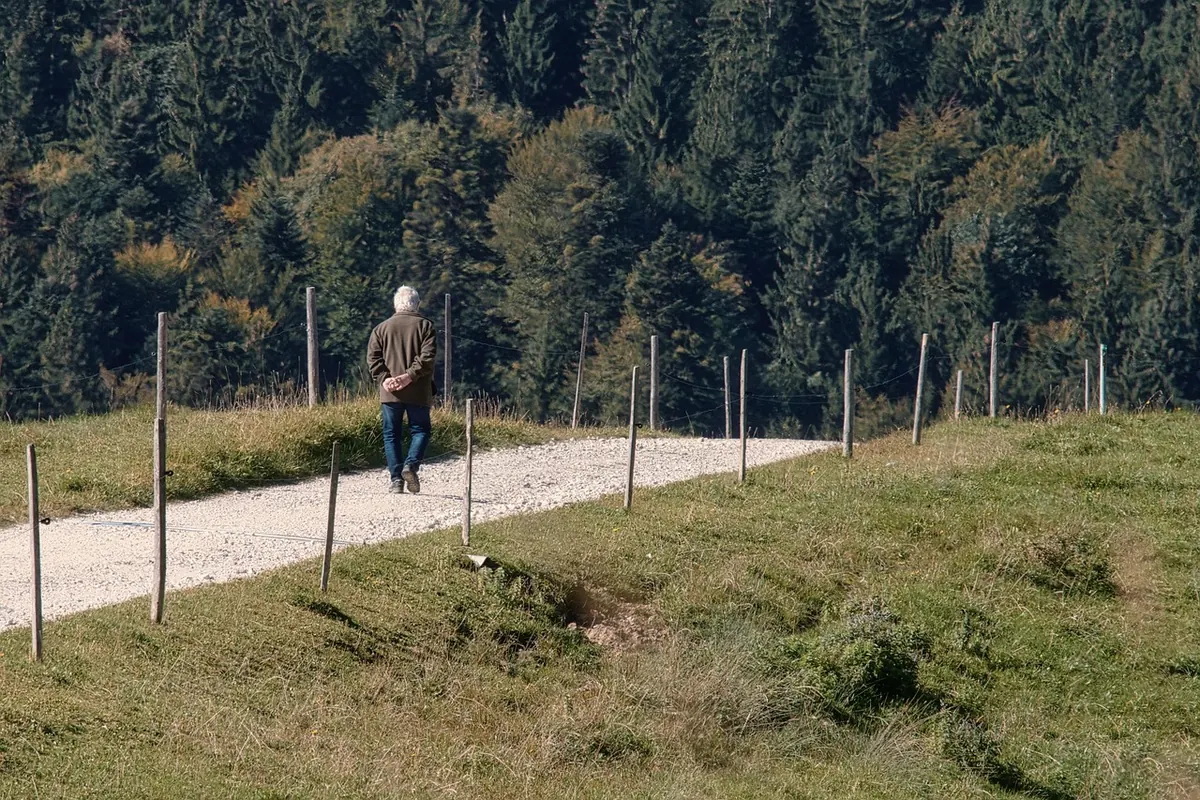
Walking rarely gets the attention that Pilates classes or the latest foam roller does, yet it is one of the most dependable things you can do for a stiff, aching or recovery-stage back. It needs no equipment beyond a pair of decent shoes, it fits around work and the school run, and it can be done in the rain, in the dark and in ten-minute slices. The useful questions are the practical ones: how much, how often, and how fast?
Why walking suits the spine
Your spine is built for movement, not for long stretches of stillness. Sitting for hours loads the same structures in the same way; walking spreads that load around. Each step asks the muscles around your hips, pelvis and spine to make small, constant adjustments, which is gentle strengthening work without a single repetition to count.
Walking is also low impact, so it rarely provokes the sharp jolts that running can cause in a sensitive back. It raises your heart rate, improves circulation and gets you out of the chair you have been folded into since 9am. Many people find that the mental lift from a walk matters as much as the physical one; pain is easier to manage when you are not braced against it all day.
It is not a cure-all. Walking will not fix a disc problem on its own, and it is not a substitute for proper assessment if something is genuinely wrong. But as a daily habit, it is hard to beat.
How much walking do you need?
General public health guidance in the UK points towards around 150 minutes of moderate activity a week — roughly 30 minutes on five days. That is a sensible long-term target, not a starting point. If your back is sore and your walking has been limited to the distance from the sofa to the kettle, 150 minutes sounds like a mountain.
For back health, total time matters far less than consistency. Ten minutes walked five days a week will do more for you than one heroic hour on a Sunday. Start with ten minutes on three or four days, hold that for a week, then add five minutes to one walk. Build slowly enough that you barely notice the increase.
Splitting it up works well. Ten minutes before work, ten at lunch and ten after dinner adds up to the same half hour, and shorter walks are easier to fit in when your back is complaining.
Signs you are doing too much
- Pain that climbs steadily during the walk rather than easing as you warm up.
- Stiffness the next morning that is clearly worse than usual.
- A flare that lasts more than a day or two after a longer walk.
- Needing to sit down repeatedly, or cutting walks short out of discomfort.
If any of those sound familiar, reduce the time or distance by a third for a week. Progress is not linear, and backing off is not failure.
How often should you walk?
Little and often beats long and occasional. Daily short walks keep the spine moving through its range and stop the stiffness that builds when you sit for most of the day. If you are managing well, walking on most days is reasonable — it is low impact and your body recovers from it quickly.
The trick is attaching the walk to something you already do, so it does not depend on motivation. Walk to the shop instead of driving. Get off the bus a stop early. Take a ten-minute loop after lunch. A walk with a purpose happens; a walk that needs deciding often does not.
During a painful flare, shorten the walk and choose flat ground rather than stopping altogether, unless a clinician has told you otherwise.
How fast should you go?
Brisk enough to feel purposeful, slow enough to hold a conversation. That is the simplest guide there is. If you can chat in full sentences, you are working at a useful pace; if you are gasping, ease off; if you could sing, pick it up slightly.
Faster is not automatically better for a bad back. A steady, even rhythm lets the muscles around the spine work smoothly, while charging along tense and hunched tends to make things worse. Aim for a pace you could keep up for twenty minutes without needing to stop and lean on a wall.
Use the first five minutes as a warm-up. Start slower than feels necessary, let your stride lengthen naturally, and finish the last few minutes gently rather than stopping dead at your front door.
A simple four-week plan for beginners
This assumes you can walk without significant pain. If you are recovering from an injury or surgery, check the plan with your GP or physiotherapist first.
- Week 1: Ten minutes on four days, flat ground, easy pace.
- Week 2: Fifteen minutes on four days, or ten minutes on six days if that suits you better.
- Week 3: Twenty minutes on four days, adding a gentle slope to one walk.
- Week 4: Twenty-five to thirty minutes on four or five days, with pace building in the middle ten minutes.
A typical week might look like this:
- Monday — 20 minutes after lunch, flat route.
- Tuesday — 10 minutes in the evening, gentle pace.
- Wednesday — 25 minutes, slightly quicker in the middle.
- Thursday — rest or a short 10-minute stroll.
- Friday — 20 minutes, include a small hill.
- Saturday — longer walk somewhere you enjoy, at talking pace.
- Sunday — 15 minutes, easy.
Walking well: posture, shoes and terrain
Stand tall but relaxed. Eyes ahead rather than on your phone, shoulders down, arms swinging naturally at your sides. Avoid over-striding — short, even steps are kinder to the lower back than long lunges. Land under your body rather than reaching out in front of you.
Wear shoes that are comfortable and supportive, but do not overthink it; there is no single correct shoe for back health. Vary your routes so your body is not doing exactly the same thing every day, and save hills and uneven ground for when you are walking without pain. If your balance is uncertain, walking poles or a friend alongside you make a real difference.
When to seek professional advice
Walking is generally safe, but some symptoms need prompt medical attention rather than a longer route. See a GP urgently if you develop numbness around the groin and saddle area, changes in bladder or bowel control, weakness in one or both legs, or unsteadiness when walking. The same applies to severe pain after a fall or accident, pain that wakes you at night, or back pain alongside unexplained weight loss.
For ordinary, grumbling back pain that is not settling after a few weeks of gentle activity, a physiotherapist or your GP can assess what is going on and tailor a plan. This guidance is general information, not personal medical advice.
Start with ten minutes today
Put your shoes on, step outside and walk for ten minutes at a pace that lets you breathe and talk. Do it again tomorrow. That is the whole programme for week one, and it is enough to begin with. Add five minutes when it starts to feel easy, keep the habit attached to something you already do, and let the distance look after itself. Your back will notice the difference long before your step count does.
Photo: Antranias / Pixabay